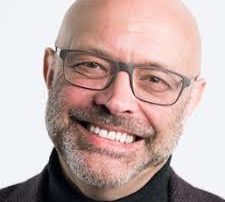
WHAT IS LIFE? – Tim Freke and Steve Taylor
In this episode of Tim Freke’s podcast “What is life?” Tim sits down with Steve Taylor, an adviser to the Galileo Commission, to contemplate the mystery of life. They touch on a variety of topics on their intellectual journey: how compassion and creativity manifest themselves in daily lives, the nature and dynamism of time, the problem of free will, how consciousness emerges and how it relates to evolutions, what kids can teach you about being present, death and much more… Their discussion is a step in the right direction to, as Tim puts it, ‘bring in a new narrative’ in our cultural and intellectual lives that can build on top of the materialistic worldview and overcome the potentially nihilistic implications of materialism.

SoS Theory as a Basis for an Account of Consciousness
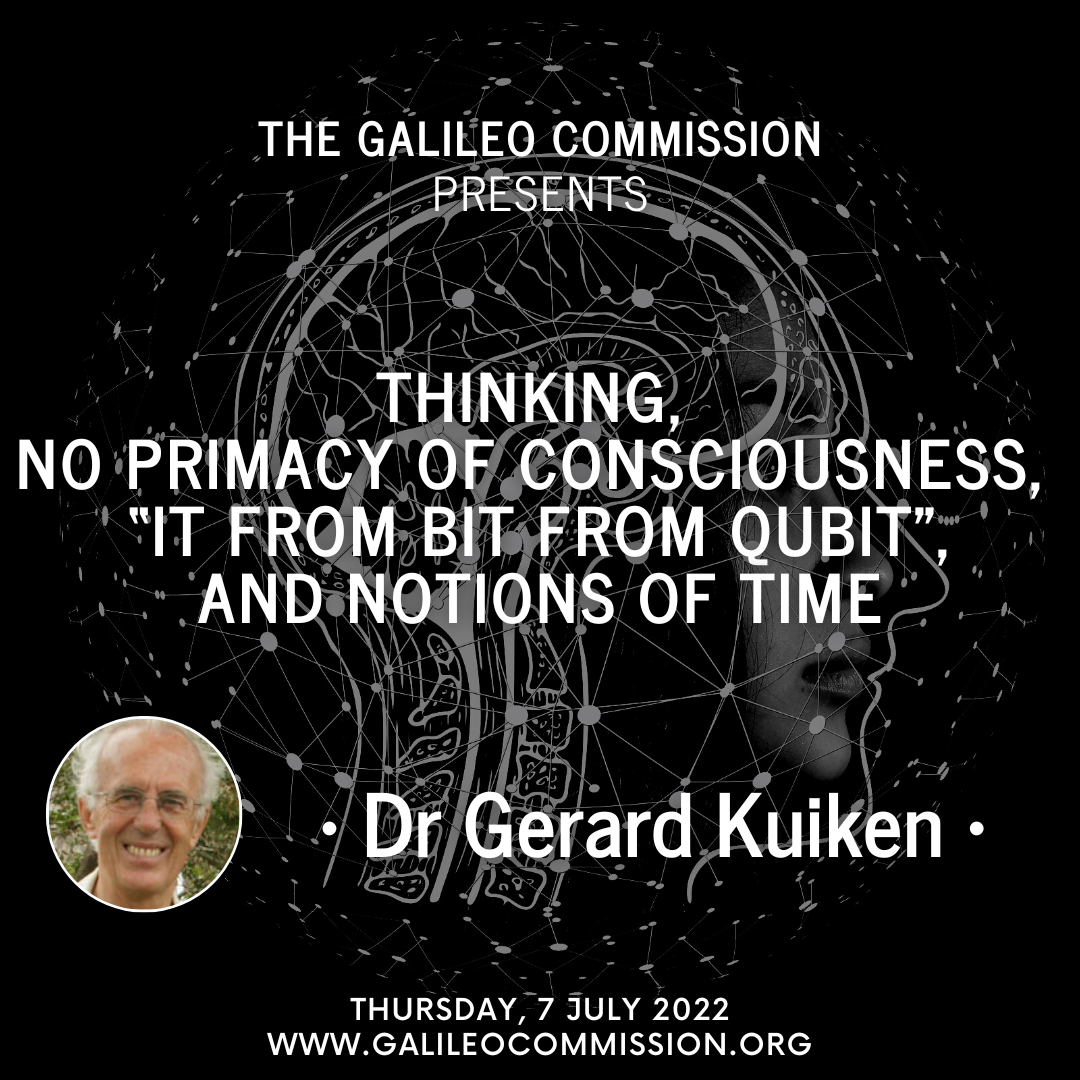
Quantizing ‘tensed’ time leads to a proposal for a panprotopsychist theory (SoS theory) which avoids the ‘binding’ and ‘combination’ problems to which most theories of this type succumb when envisaged as providers of a basis for our form of conscious experience. For this reason, SoS theory is regarded as relatively plausible, while it has empirically testable implications for both a potential means of inducing general anaesthesia and for the probable manifestation of brief violations of objective energy conservation.

October 2019 Newsletter
October Newsletter
WHAT IS LIFE? – Tim Freke and Steve Taylor
In this episode of Tim Freke’s podcast “What is life?” Tim sits down with Steve Taylor, an adviser to the Galileo Commission, to contemplate the mystery of life. They touch on a variety of topics on their intellectual journey: how compassion and creativity manifest themselves in daily lives, the nature and dynamism of time, the problem of free will, how consciousness emerges and how it relates to evolutions, what kids can teach you about being present, death and much more… Their discussion is a step in the right direction to, as Tim puts it, ‘bring in a new narrative’ in our cultural and intellectual lives that can build on top of the materialistic worldview and overcome the potentially nihilistic implications of materialism.
SoS Theory as a Basis for an Account of Consciousness
Quantizing ‘tensed’ time leads to a proposal for a panprotopsychist theory (SoS theory) which avoids the ‘binding’ and ‘combination’ problems to which most theories of this type succumb when envisaged as providers of a basis for our form of conscious experience. For this reason, SoS theory is regarded as relatively plausible, while it has empirically testable implications for both a potential means of inducing general anaesthesia and for the probable manifestation of brief violations of objective energy conservation.
October 2019 Newsletter
October Newsletter
WHAT IS LIFE? – Tim Freke and Steve Taylor
In this episode of Tim Freke’s podcast “What is life?” Tim sits down with Steve Taylor, an adviser to the Galileo Commission, to contemplate the mystery of life. They touch on a variety of topics on their intellectual journey: how compassion and creativity manifest themselves in daily lives, the nature and dynamism of time, the problem of free will, how consciousness emerges and how it relates to evolutions, what kids can teach you about being present, death and much more… Their discussion is a step in the right direction to, as Tim puts it, ‘bring in a new narrative’ in our cultural and intellectual lives that can build on top of the materialistic worldview and overcome the potentially nihilistic implications of materialism.
SoS Theory as a Basis for an Account of Consciousness
Quantizing ‘tensed’ time leads to a proposal for a panprotopsychist theory (SoS theory) which avoids the ‘binding’ and ‘combination’ problems to which most theories of this type succumb when envisaged as providers of a basis for our form of conscious experience. For this reason, SoS theory is regarded as relatively plausible, while it has empirically testable implications for both a potential means of inducing general anaesthesia and for the probable manifestation of brief violations of objective energy conservation.
October 2019 Newsletter
October Newsletter
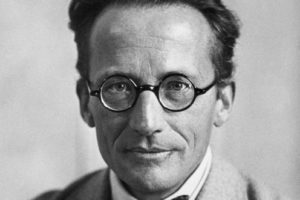
– Erwin Schrödinger
– Prof David Bohm
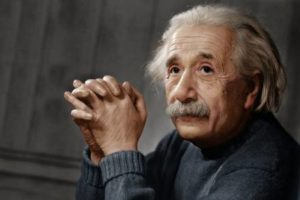
– Albert Einstein
Click on any event to view the recordings as well as event details