A Course by Ravi Ravindra – They Journey of a Pilgrim
Saturdays, 10:00 – 11:30 a.m. CT June 7 – 28 (4 classes) The Pilgrim Journey A Deep
Consciousness: On its Source, and Operations
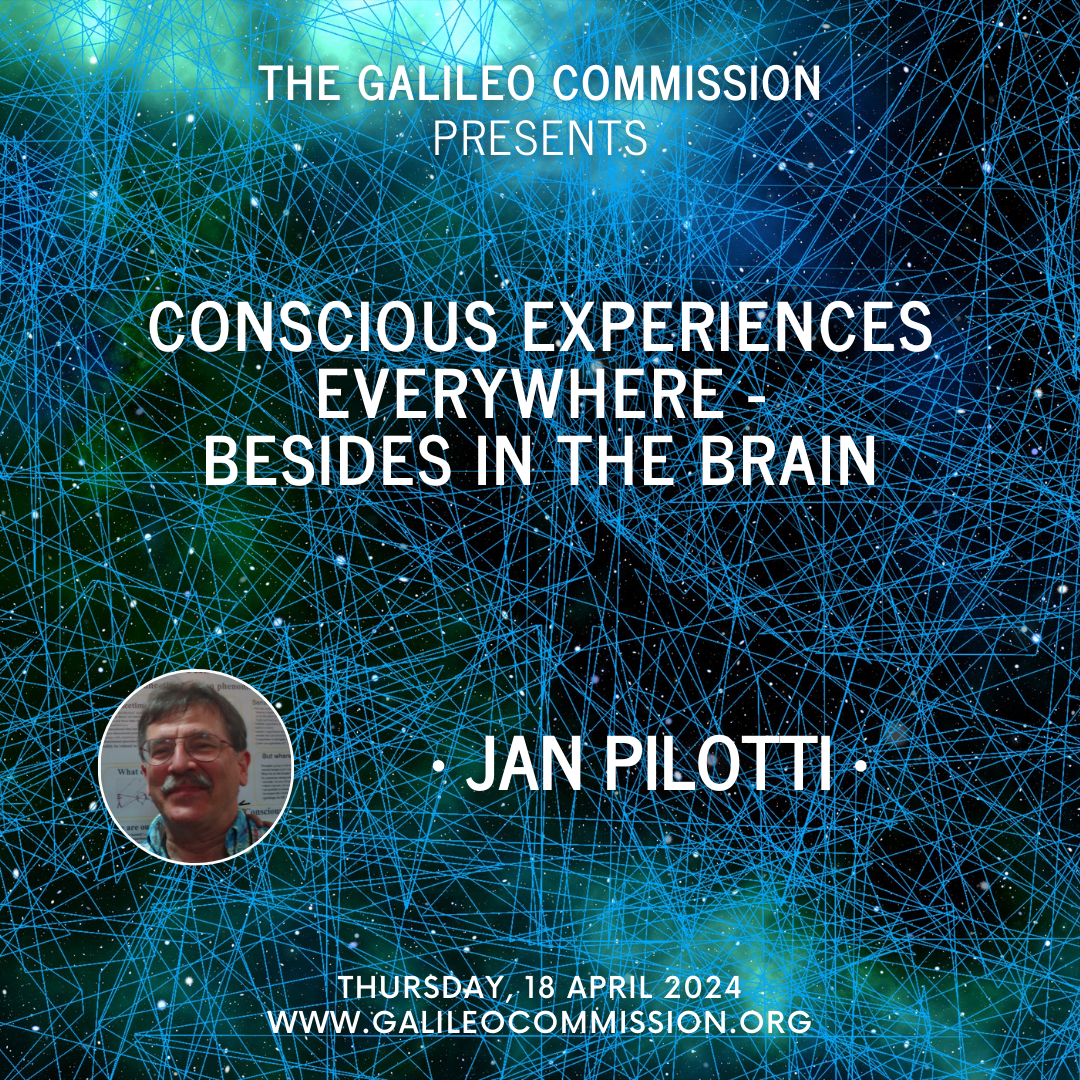
Traditional approach to consciousness research accepting the brain as its source has not fruitfully worked. This article takes an inverted approach accepting consciousness as the most fundamental, and the brain, or even a biological single cell, is an organ of behavior for manifestations of consciousness. The idea has been supported by several pieces of evidence from different disciplines of science, medicine, neuroscience, plant biology, and cellular cognition. The human brain at the ZPE state has been emphasized as the fountainhead of creativity. Twelve emerging areas have been clearly chalked out for further research. A model of Brain-Consciousness coupling and another on Consciousness-Brain coupling have been proposed. The paper leads us towards Immersive Neuroscience as the helm of several disciplines of science and for a science-based, consciousness-centric spirituality for humanity.
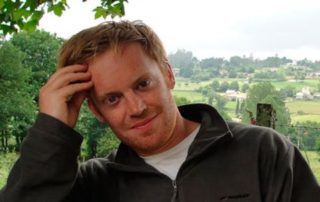
Jules Evans – The uselessness of non-materialist theories of reality
Materialism doesn’t really explain consciousness at all — it simply ignores it, or calls it an epiphenomenon. Seeing as the only thing we know for sure is that we’re conscious, and we experience everything through our consciousness, it’s amazing that a theory that ignores consciousness and has no explanation for it has lasted this long.
A Course by Ravi Ravindra – They Journey of a Pilgrim
Saturdays, 10:00 – 11:30 a.m. CT June 7 – 28 (4 classes) The Pilgrim Journey A Deep
Consciousness: On its Source, and Operations
Traditional approach to consciousness research accepting the brain as its source has not fruitfully worked. This article takes an inverted approach accepting consciousness as the most fundamental, and the brain, or even a biological single cell, is an organ of behavior for manifestations of consciousness. The idea has been supported by several pieces of evidence from different disciplines of science, medicine, neuroscience, plant biology, and cellular cognition. The human brain at the ZPE state has been emphasized as the fountainhead of creativity. Twelve emerging areas have been clearly chalked out for further research. A model of Brain-Consciousness coupling and another on Consciousness-Brain coupling have been proposed. The paper leads us towards Immersive Neuroscience as the helm of several disciplines of science and for a science-based, consciousness-centric spirituality for humanity.
Jules Evans – The uselessness of non-materialist theories of reality
Materialism doesn’t really explain consciousness at all — it simply ignores it, or calls it an epiphenomenon. Seeing as the only thing we know for sure is that we’re conscious, and we experience everything through our consciousness, it’s amazing that a theory that ignores consciousness and has no explanation for it has lasted this long.
A Course by Ravi Ravindra – They Journey of a Pilgrim
Saturdays, 10:00 – 11:30 a.m. CT June 7 – 28 (4 classes) The Pilgrim Journey A Deep
Consciousness: On its Source, and Operations
Traditional approach to consciousness research accepting the brain as its source has not fruitfully worked. This article takes an inverted approach accepting consciousness as the most fundamental, and the brain, or even a biological single cell, is an organ of behavior for manifestations of consciousness. The idea has been supported by several pieces of evidence from different disciplines of science, medicine, neuroscience, plant biology, and cellular cognition. The human brain at the ZPE state has been emphasized as the fountainhead of creativity. Twelve emerging areas have been clearly chalked out for further research. A model of Brain-Consciousness coupling and another on Consciousness-Brain coupling have been proposed. The paper leads us towards Immersive Neuroscience as the helm of several disciplines of science and for a science-based, consciousness-centric spirituality for humanity.
Jules Evans – The uselessness of non-materialist theories of reality
Materialism doesn’t really explain consciousness at all — it simply ignores it, or calls it an epiphenomenon. Seeing as the only thing we know for sure is that we’re conscious, and we experience everything through our consciousness, it’s amazing that a theory that ignores consciousness and has no explanation for it has lasted this long.
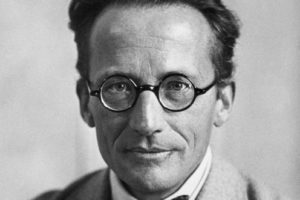
– Erwin Schrödinger
– Prof David Bohm
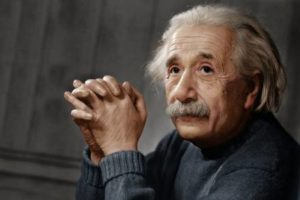
– Albert Einstein
Click on any event to view the recordings as well as event details