Diane Corcoran & Robert Caplan – Veteran NDEs
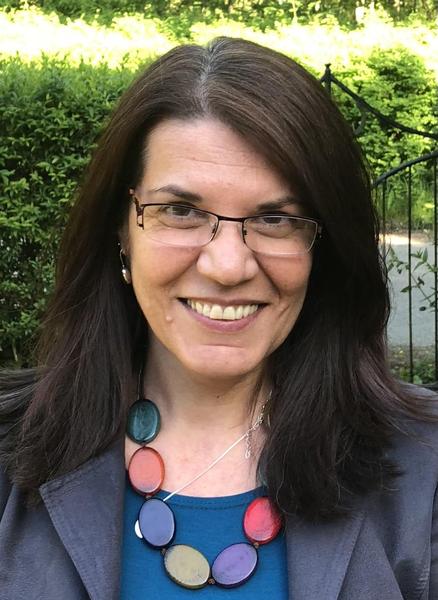
Diane Corcoran talks about her experience with NDEs as a US Army nurse in Vietnam and serving in the military over a 24-year career, including as Chief Nurse and Commander of a Combat Support Hospital. Robert Caplan is a Navy veteran near-death experiencer: This presentation will address my knowing of my/our true identity.
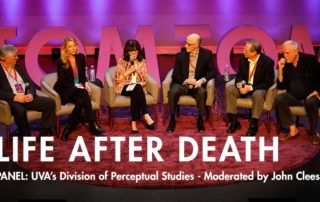
Is There Life After Death? – Panel discussion
In this panel, the legendary actor, writer and comedian John Cleese, convenes the University of Virginia's Division of Perceptual Studies (DOPS) research faculty to present an overview of the research to which they have dedicated their academic careers. Members of DOPS include GC advisers Bruce Greyson, Kim Penberthy, Edward Kelly, Emily Kelly, as well as Jim Tucker and Chester Carlson.
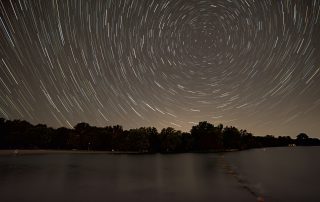
Quantum gravity and taoist cosmology
Here, a detailed analysis of cosmogony is offered, first in terms of the theory of dimensional development and its Taoist (yin-yang) counterpart, then in terms of the evolution of the elemental force particles through cycles of expansion and contraction in a spiraling universe.
Diane Corcoran & Robert Caplan – Veteran NDEs
Diane Corcoran talks about her experience with NDEs as a US Army nurse in Vietnam and serving in the military over a 24-year career, including as Chief Nurse and Commander of a Combat Support Hospital. Robert Caplan is a Navy veteran near-death experiencer: This presentation will address my knowing of my/our true identity.
Is There Life After Death? – Panel discussion
In this panel, the legendary actor, writer and comedian John Cleese, convenes the University of Virginia's Division of Perceptual Studies (DOPS) research faculty to present an overview of the research to which they have dedicated their academic careers. Members of DOPS include GC advisers Bruce Greyson, Kim Penberthy, Edward Kelly, Emily Kelly, as well as Jim Tucker and Chester Carlson.
Quantum gravity and taoist cosmology
Here, a detailed analysis of cosmogony is offered, first in terms of the theory of dimensional development and its Taoist (yin-yang) counterpart, then in terms of the evolution of the elemental force particles through cycles of expansion and contraction in a spiraling universe.
Diane Corcoran & Robert Caplan – Veteran NDEs
Diane Corcoran talks about her experience with NDEs as a US Army nurse in Vietnam and serving in the military over a 24-year career, including as Chief Nurse and Commander of a Combat Support Hospital. Robert Caplan is a Navy veteran near-death experiencer: This presentation will address my knowing of my/our true identity.
Is There Life After Death? – Panel discussion
In this panel, the legendary actor, writer and comedian John Cleese, convenes the University of Virginia's Division of Perceptual Studies (DOPS) research faculty to present an overview of the research to which they have dedicated their academic careers. Members of DOPS include GC advisers Bruce Greyson, Kim Penberthy, Edward Kelly, Emily Kelly, as well as Jim Tucker and Chester Carlson.
Quantum gravity and taoist cosmology
Here, a detailed analysis of cosmogony is offered, first in terms of the theory of dimensional development and its Taoist (yin-yang) counterpart, then in terms of the evolution of the elemental force particles through cycles of expansion and contraction in a spiraling universe.
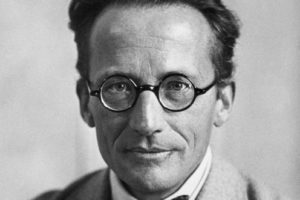
– Erwin Schrödinger
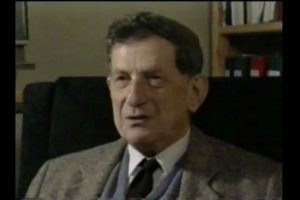
– Prof David Bohm
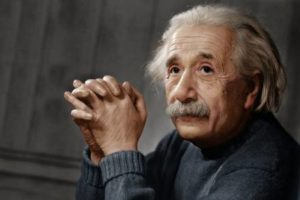
– Albert Einstein
Click on any event to view the recordings as well as event details