Evolution and the Transcendence of Mind
Perhaps, then, with a bit of humility and a sense of humour, computer science can help us learn something about the mind's radically transcendent nature. After all, it is the human mind that invents artificial ones (as much for the fun as for the utility of it) and then has room left over to defy the logic or grow bored with their predictable correctness. That 'room' is the evolutionary margin of life still waiting to be explored. What computers can do represents so many routinised mental functions we can now delegate and slough off as we move forward to new ground. The machines are behind us, not ahead.
Life at the Edge of Science
She begins with considerations on the role of anomalies in science, which she regards as crucial to promoting continuous scientific innovation and breakthroughs. Instead of a state of ‘balanced openness’ recommended by the author, the reactions of orthodox scientists to anomalies are frequently hostile and defensive. This in itself is less surprising when one considers the personal costs of stepping out of the mainstream and being branded as a heretic: loss of funding, difficulty in publishing, loss of reputation, obstacles to advancement, critical backlash and even loss of employment.
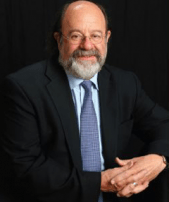
Gary Schwartz on the Science of the Afterlife
In this interview, Gary Schwartz, an adviser to the Galileo Commission, discusses the most recent evidence of the afterlife. He answers questions including: What are the most convincing arguments for the existence of the afterlife? What are the most gripping experiences he's had, inside or outside of the lab? What changes has he made after he's been convinced of the afterlife? Has he had any spiritual experiences himself?
Evolution and the Transcendence of Mind
Perhaps, then, with a bit of humility and a sense of humour, computer science can help us learn something about the mind's radically transcendent nature. After all, it is the human mind that invents artificial ones (as much for the fun as for the utility of it) and then has room left over to defy the logic or grow bored with their predictable correctness. That 'room' is the evolutionary margin of life still waiting to be explored. What computers can do represents so many routinised mental functions we can now delegate and slough off as we move forward to new ground. The machines are behind us, not ahead.
Life at the Edge of Science
She begins with considerations on the role of anomalies in science, which she regards as crucial to promoting continuous scientific innovation and breakthroughs. Instead of a state of ‘balanced openness’ recommended by the author, the reactions of orthodox scientists to anomalies are frequently hostile and defensive. This in itself is less surprising when one considers the personal costs of stepping out of the mainstream and being branded as a heretic: loss of funding, difficulty in publishing, loss of reputation, obstacles to advancement, critical backlash and even loss of employment.
Gary Schwartz on the Science of the Afterlife
In this interview, Gary Schwartz, an adviser to the Galileo Commission, discusses the most recent evidence of the afterlife. He answers questions including: What are the most convincing arguments for the existence of the afterlife? What are the most gripping experiences he's had, inside or outside of the lab? What changes has he made after he's been convinced of the afterlife? Has he had any spiritual experiences himself?
Evolution and the Transcendence of Mind
Perhaps, then, with a bit of humility and a sense of humour, computer science can help us learn something about the mind's radically transcendent nature. After all, it is the human mind that invents artificial ones (as much for the fun as for the utility of it) and then has room left over to defy the logic or grow bored with their predictable correctness. That 'room' is the evolutionary margin of life still waiting to be explored. What computers can do represents so many routinised mental functions we can now delegate and slough off as we move forward to new ground. The machines are behind us, not ahead.
Life at the Edge of Science
She begins with considerations on the role of anomalies in science, which she regards as crucial to promoting continuous scientific innovation and breakthroughs. Instead of a state of ‘balanced openness’ recommended by the author, the reactions of orthodox scientists to anomalies are frequently hostile and defensive. This in itself is less surprising when one considers the personal costs of stepping out of the mainstream and being branded as a heretic: loss of funding, difficulty in publishing, loss of reputation, obstacles to advancement, critical backlash and even loss of employment.
Gary Schwartz on the Science of the Afterlife
In this interview, Gary Schwartz, an adviser to the Galileo Commission, discusses the most recent evidence of the afterlife. He answers questions including: What are the most convincing arguments for the existence of the afterlife? What are the most gripping experiences he's had, inside or outside of the lab? What changes has he made after he's been convinced of the afterlife? Has he had any spiritual experiences himself?

– Erwin Schrödinger
– Prof David Bohm


– Albert Einstein
Click on any event to view the recordings as well as event details