Radical Provincialism in the Life Sciences – Chapter 2 from Crimes of Reason
However, my own assessment was that Sheldrake’s staunchest supporters and detractors were both wrong: Sheldrake’s view of formative causation was neither viable nor as radical as it seemed. But it wasn’t crazy either; in fact, Sheldrake’s proposal revealed considerable intelligence, insight, and originality. Nevertheless, it was seriously flawed, and to my surprise I found it to be flawed for the same reasons as the theories Sheldrake was concerned with rejecting.
Memory without a Trace – Chapter 1 from Crimes of Reason
One of the most persistent conceptual errors in philosophy, psychology, and neurophysiology is the attempt to explain memory by means of memory traces (sometimes called “engrams”). The underlying problems are very deep and difficult to dispel, and as a result, trace theories are quite seductive.

Beyond Belief: When Science Becomes A Religion (A response to Lane and Visser)
In this essay, I will focus on three of the typical characteristics of belief systems. The first is that adherents to a religion or belief system accept tenuous assumptions and presuppositions as facts. The second is that adherents may not be consciously aware that they have adopted a belief system, and interpret the world through the prism of their beliefs without being consciously aware of any filtering or distorting.
Radical Provincialism in the Life Sciences – Chapter 2 from Crimes of Reason
However, my own assessment was that Sheldrake’s staunchest supporters and detractors were both wrong: Sheldrake’s view of formative causation was neither viable nor as radical as it seemed. But it wasn’t crazy either; in fact, Sheldrake’s proposal revealed considerable intelligence, insight, and originality. Nevertheless, it was seriously flawed, and to my surprise I found it to be flawed for the same reasons as the theories Sheldrake was concerned with rejecting.
Memory without a Trace – Chapter 1 from Crimes of Reason
One of the most persistent conceptual errors in philosophy, psychology, and neurophysiology is the attempt to explain memory by means of memory traces (sometimes called “engrams”). The underlying problems are very deep and difficult to dispel, and as a result, trace theories are quite seductive.
Beyond Belief: When Science Becomes A Religion (A response to Lane and Visser)
In this essay, I will focus on three of the typical characteristics of belief systems. The first is that adherents to a religion or belief system accept tenuous assumptions and presuppositions as facts. The second is that adherents may not be consciously aware that they have adopted a belief system, and interpret the world through the prism of their beliefs without being consciously aware of any filtering or distorting.
Radical Provincialism in the Life Sciences – Chapter 2 from Crimes of Reason
However, my own assessment was that Sheldrake’s staunchest supporters and detractors were both wrong: Sheldrake’s view of formative causation was neither viable nor as radical as it seemed. But it wasn’t crazy either; in fact, Sheldrake’s proposal revealed considerable intelligence, insight, and originality. Nevertheless, it was seriously flawed, and to my surprise I found it to be flawed for the same reasons as the theories Sheldrake was concerned with rejecting.
Memory without a Trace – Chapter 1 from Crimes of Reason
One of the most persistent conceptual errors in philosophy, psychology, and neurophysiology is the attempt to explain memory by means of memory traces (sometimes called “engrams”). The underlying problems are very deep and difficult to dispel, and as a result, trace theories are quite seductive.
Beyond Belief: When Science Becomes A Religion (A response to Lane and Visser)
In this essay, I will focus on three of the typical characteristics of belief systems. The first is that adherents to a religion or belief system accept tenuous assumptions and presuppositions as facts. The second is that adherents may not be consciously aware that they have adopted a belief system, and interpret the world through the prism of their beliefs without being consciously aware of any filtering or distorting.
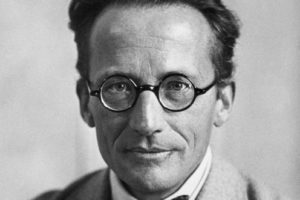
– Erwin Schrödinger
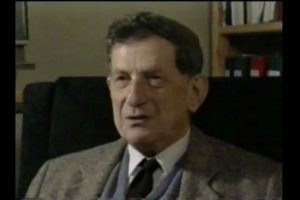
– Prof David Bohm
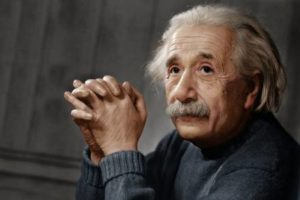
– Albert Einstein
Click on any event to view the recordings as well as event details