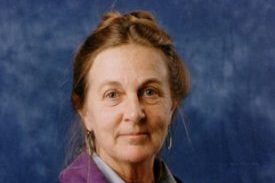
Part II: Complementing Reductionism – AliciaLandman-Reiner
Life sciences today approach nature through a reductionist lens. A broadened methodology, known as Goethean science, complements that one-sided perspective. Building on the elements of the qualitative and the wholeness of organisms, novel examples of non-reductionist work in plant growth, animal, and specifically human organization, are described.
Part I: Complementing Reductionism – AliciaLandman-Reiner
While integrative practices in health care have grown over the past half-century, life sciences still view nature almost entirely through a reductionist lens. Contemporary research is described that complements this reductionist, non-holistic perspective with the methods of Goethean science. A rigorous approach to qualitative science and to wholeness in nature is outlined.
Imaginal Inspirations with Bruce Greyson
Bruce Greyson is Professor Emeritus of Psychiatry and Neurobehavioral Sciences at the University of Virginia School of Medicine. He was the immediate successor to the Carlsson Chair after the legendary Ian Stevenson, who founded the Department of Perceptual Studies in the University of Virginia in 1967. Ian is famous for his meticulous studies of children who remember previous lives but he also researched near-death experiences in India. Bruce was a co-founder and President of the International Association for Near-Death Studies and Editor of the Journal of Near-Death Studies for many years and author of The Handbook of Near-Death Studies.
Part II: Complementing Reductionism – AliciaLandman-Reiner
Life sciences today approach nature through a reductionist lens. A broadened methodology, known as Goethean science, complements that one-sided perspective. Building on the elements of the qualitative and the wholeness of organisms, novel examples of non-reductionist work in plant growth, animal, and specifically human organization, are described.
Part I: Complementing Reductionism – AliciaLandman-Reiner
While integrative practices in health care have grown over the past half-century, life sciences still view nature almost entirely through a reductionist lens. Contemporary research is described that complements this reductionist, non-holistic perspective with the methods of Goethean science. A rigorous approach to qualitative science and to wholeness in nature is outlined.
Imaginal Inspirations with Bruce Greyson
Bruce Greyson is Professor Emeritus of Psychiatry and Neurobehavioral Sciences at the University of Virginia School of Medicine. He was the immediate successor to the Carlsson Chair after the legendary Ian Stevenson, who founded the Department of Perceptual Studies in the University of Virginia in 1967. Ian is famous for his meticulous studies of children who remember previous lives but he also researched near-death experiences in India. Bruce was a co-founder and President of the International Association for Near-Death Studies and Editor of the Journal of Near-Death Studies for many years and author of The Handbook of Near-Death Studies.
Part II: Complementing Reductionism – AliciaLandman-Reiner
Life sciences today approach nature through a reductionist lens. A broadened methodology, known as Goethean science, complements that one-sided perspective. Building on the elements of the qualitative and the wholeness of organisms, novel examples of non-reductionist work in plant growth, animal, and specifically human organization, are described.
Part I: Complementing Reductionism – AliciaLandman-Reiner
While integrative practices in health care have grown over the past half-century, life sciences still view nature almost entirely through a reductionist lens. Contemporary research is described that complements this reductionist, non-holistic perspective with the methods of Goethean science. A rigorous approach to qualitative science and to wholeness in nature is outlined.
Imaginal Inspirations with Bruce Greyson
Bruce Greyson is Professor Emeritus of Psychiatry and Neurobehavioral Sciences at the University of Virginia School of Medicine. He was the immediate successor to the Carlsson Chair after the legendary Ian Stevenson, who founded the Department of Perceptual Studies in the University of Virginia in 1967. Ian is famous for his meticulous studies of children who remember previous lives but he also researched near-death experiences in India. Bruce was a co-founder and President of the International Association for Near-Death Studies and Editor of the Journal of Near-Death Studies for many years and author of The Handbook of Near-Death Studies.
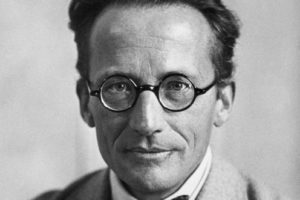
– Erwin Schrödinger
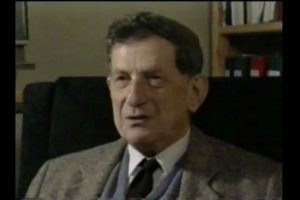
– Prof David Bohm

– Albert Einstein
Click on any event to view the recordings as well as event details